
Table of Contents
ToggleWhy Choose Natural Cleaning Methods?
Before diving into specific techniques, it’s worth understanding why natural cleaning methods are beneficial. Conventional cleaners often contain strong chemicals that may degrade the protective layer on stainless steel over time, leading to rust and discoloration. Additionally, these chemicals can be harmful if they come into contact with food or skin. Natural alternatives, on the other hand, are typically non-toxic, gentle, and just as effective at removing stains, grime, and buildup from stainless steel surfaces.
Essential Supplies for Cleaning Stainless Steel Cutlery
Most of the supplies needed for naturally cleaning stainless steel cutlery are everyday household items, making it easy to implement these methods. Here’s what you’ll need:
- White vinegar: A natural acid that cuts through grime and removes mineral deposits.
- Baking soda: Mildly abrasive and excellent for tackling tough stains.
- Lemon: The acidity and fresh scent help brighten the metal and remove fingerprints.
- Olive oil: Adds a polished, streak-free finish.
- Microfiber or soft cotton cloth: Prevents scratching while drying and buffing the cutlery.
- Dish soap: Preferably a gentle, plant-based formula that won’t harm the metal.
How to Clean Stainless Steel Cutlery with Vinegar
Vinegar is one of the most versatile and effective natural cleaners available. For stainless steel cutlery, vinegar can help dissolve water spots, eliminate smudges, and restore shine.
Step-by-Step Instructions
- Prepare the Vinegar Solution
In a bowl, mix equal parts of white vinegar and warm water. The vinegar’s acidity will help to break down mineral deposits and grime without scratching the surface. - Soak the Cutlery
Place the stainless steel cutlery in the vinegar solution and let it soak for 10–15 minutes. This will loosen any debris, hard water stains, or streaks. - Wipe and Rinse
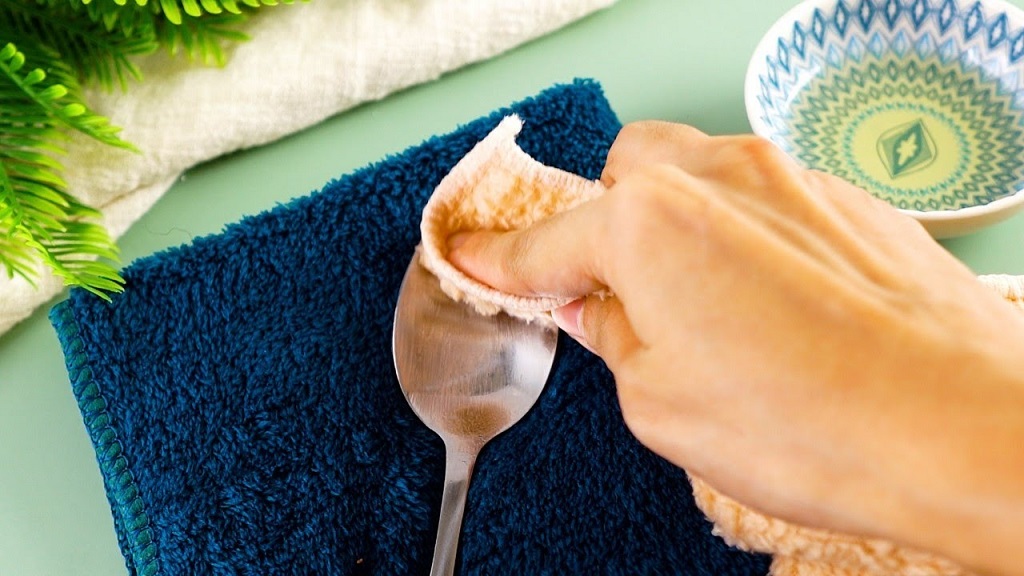
After soaking, use a soft cloth to wipe each piece of cutlery, paying attention to areas with visible stains. Rinse thoroughly with warm water to remove any remaining vinegar. - Dry and Polish
Use a microfiber or soft cotton cloth to dry and polish each piece of cutlery. This prevents water spots from forming as they dry and gives the metal a streak-free shine.
Using Baking Soda for Stubborn Stains
If your stainless steel cutlery has stubborn stains, such as tarnish or old food residue, baking soda can be incredibly effective. Its gentle abrasiveness makes it ideal for removing grime without scratching the surface.
Step-by-Step Instructions
- Create a Baking Soda Paste
In a small bowl, mix baking soda with just enough water to create a paste. This paste will serve as a mild abrasive for scrubbing away stubborn stains. - Apply the Paste to the Cutlery
Using your fingers or a soft cloth, spread the baking soda paste onto the cutlery. Focus on any areas with visible staining or buildup. - Gently Scrub the Surface
Rub the paste onto the cutlery in circular motions. Be gentle to avoid scratching the metal, but firm enough to lift any grime. - Rinse and Dry
Rinse the cutlery thoroughly to remove all traces of baking soda. Dry each piece immediately with a microfiber cloth to prevent water spots.
Lemon as a Natural Deodorizer and Shine Enhancer
Lemon is not only great for removing odors but also effective at adding a natural shine to stainless steel. Its acidity cuts through grease and its pleasant aroma leaves cutlery smelling fresh.
Step-by-Step Instructions
- Cut a Lemon in Half
Grab a fresh lemon and cut it in half. If you prefer, you can squeeze the juice into a bowl for easier application. - Rub the Lemon on the Cutlery
Rub the cut side of the lemon directly onto each piece of cutlery. The acidity in the lemon juice will break down any stains, fingerprints, or smudges. - Rinse with Warm Water
After using the lemon, rinse each piece of cutlery under warm water to remove any sticky residue. - Dry and Buff
Use a microfiber cloth to dry and buff the cutlery, giving it a polished look.
Polishing Stainless Steel Cutlery with Olive Oil
For an extra glossy finish, olive oil works wonders. This natural oil gives stainless steel cutlery a polished, streak-free appearance without the need for any harsh chemicals.
Step-by-Step Instructions
- Dab a Small Amount of Olive Oil onto a Cloth
Put a few drops of olive oil onto a clean, soft cloth. A little goes a long way, so start with just a small amount. - Polish Each Piece of Cutlery
Rub the cloth gently over the cutlery in small circular motions. This will help distribute the oil and bring out the natural luster of the stainless steel. - Remove Excess Oil
After polishing, use a dry part of the cloth or a separate cloth to wipe away any excess oil, leaving a beautiful, streak-free shine.
General Maintenance Tips for Stainless Steel Cutlery
To keep your stainless steel cutlery looking its best for longer, a few simple habits can make a big difference. Here are some general tips for maintaining its appearance:
- Wash Immediately After Use: Foods with high acidity, like tomatoes or vinegar-based dressings, can stain or dull stainless steel if left on for too long. Try to wash your cutlery right after meals.
- Avoid the Dishwasher: Although many stainless steel items are labeled dishwasher-safe, the high temperatures and harsh detergents can lead to dulling or scratching. Hand washing with warm soapy water is gentler and more effective.
- Dry Promptly: Always dry stainless steel cutlery immediately after washing to prevent water spots and streaks. Using a soft cloth to dry helps preserve its shine.
- Polish Regularly: Incorporating a natural polishing routine with vinegar, baking soda, or olive oil can help maintain the gleaming appearance of your cutlery.
Final Thoughts
Cleaning stainless steel cutlery naturally doesn’t require any complicated or expensive products. With a few basic ingredients from your kitchen, you can keep your silverware free from water spots, streaks, and stains. Vinegar, baking soda, lemon, and olive oil all play unique roles in restoring the original shine of stainless steel while ensuring a safe, chemical-free environment for you and your family. By following these simple steps and making them a regular part of your cleaning routine, you’ll enjoy spotless, gleaming cutlery that looks as good as new.