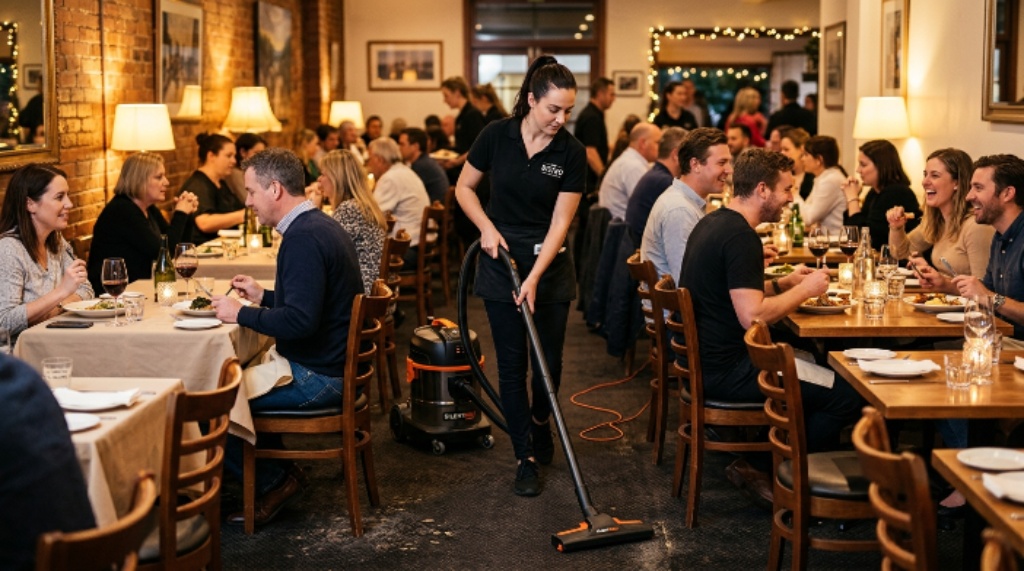
A noisy vacuum cleaner can ruin a dining experience in seconds. Imagine enjoying a quiet meal and suddenly hearing a roaring machine just a few feet away. It is disruptive, uncomfortable, and bad for business. Therefore, choosing the right vacuum for a busy dining space is not just about cleaning power. It is also about protecting the atmosphere your guests expect.
This guide will help you understand exactly what to look for when buying a quiet vacuum cleaner for restaurants, cafes, and other busy dining environments.
Why Noise Level Matters in Dining Spaces
Noise is one of the most overlooked factors in restaurant management. Studies show that excessive noise negatively affects the dining experience. Guests become stressed, conversations feel strained, and the overall mood drops. When cleaning equipment adds to that noise, it makes the problem even worse.
Many dining spaces clean between meal services or during operating hours. In either case, a loud vacuum is a liability. It signals a lack of professionalism. On the other hand, quiet equipment allows staff to clean discreetly without disturbing guests or nearby workers.
Additionally, repeated exposure to loud machinery can affect staff health over time. Lower noise levels create a better working environment for your entire team.
Understanding Decibel Levels and What They Mean
Sound is measured in decibels, often written as dB. The lower the decibel rating, the quieter the machine. A normal conversation sits around 60 dB. A traditional vacuum cleaner often reaches 75 to 85 dB, which is noticeably loud in an enclosed space.
For dining areas, aim for a vacuum that operates at 70 dB or lower. Many modern low noise vacuum models now operate between 60 and 68 dB. Some premium options go even lower. Therefore, always check the decibel rating on the product specification sheet before making a purchase.
Do not rely on vague marketing terms like “whisper quiet” without verifying the actual dB number. Numbers do not lie, but marketing language sometimes does.
Types of Vacuum Cleaners Suitable for Dining Spaces
Not every vacuum is designed for a commercial dining environment. Knowing your options helps you make a smarter choice.
Canister vacuums are a popular choice for dining rooms. They tend to be quieter than upright models because the motor is housed in a separate unit that sits on the floor. Additionally, they are flexible and easy to maneuver around table legs and chairs.
Upright vacuums are more powerful but can be louder. However, some newer upright models are specifically engineered for low noise output. If you prefer an upright design, look for commercial-grade models that list noise reduction as a key feature.
Stick vacuums and cordless models are lightweight and convenient. They are often quieter by design because they use smaller motors. However, they may lack the suction power needed for heavy-duty restaurant maintenance in large dining areas.
Robotic vacuums are another emerging option. They operate almost silently and can run during off-hours without any staff involvement. However, they work best as a supplement to regular vacuuming rather than a complete replacement.
Key Features to Look for in a Quiet Dining Room Vacuum
When comparing models, focus on specific features rather than brand names alone. The right combination of features will serve your dining space well.
Here are the most important features to consider:
- A decibel rating of 70 dB or lower for true quiet operation
- Strong suction power despite the reduced noise, ideally with multi-stage filtration
- HEPA filtration to capture fine dust, allergens, and food particles
- A large dustbin or bag capacity to reduce how often you need to empty it
- Smooth-rolling wheels that do not scratch hardwood or tile floors
- A long power cord or strong battery life for covering large floor areas
- Attachments for upholstery, corners, and hard-to-reach spots under tables
Additionally, consider the weight of the machine. A heavy vacuum is tiring to use during long cleaning sessions. Look for models that balance power with portability.
Corded vs. Cordless: Which Is Better for Restaurants?
This is a common question among restaurant owners and managers. Both options have their advantages.
Corded vacuums offer consistent power throughout the cleaning session. You never have to worry about the battery dying mid-clean. However, managing a long cord in a busy dining room can be tricky. Staff must be careful to avoid tripping hazards.
Cordless vacuums offer freedom of movement and are generally quieter. They are ideal for quick spot-cleaning between services. However, battery life remains a limitation. Most cordless models run between 30 and 60 minutes on a full charge. Therefore, for large dining rooms, you may need more than one battery or a corded backup.
The best approach for many restaurants is to use both. A corded model handles deep cleaning during off-hours, while a cordless unit handles quick touch-ups during the day.
Filtration and Hygiene in Food Service Environments
Filtration is especially important in food service settings. Dining rooms collect crumbs, food debris, dust, and sometimes allergens. A vacuum that simply moves particles around rather than trapping them is a health risk.
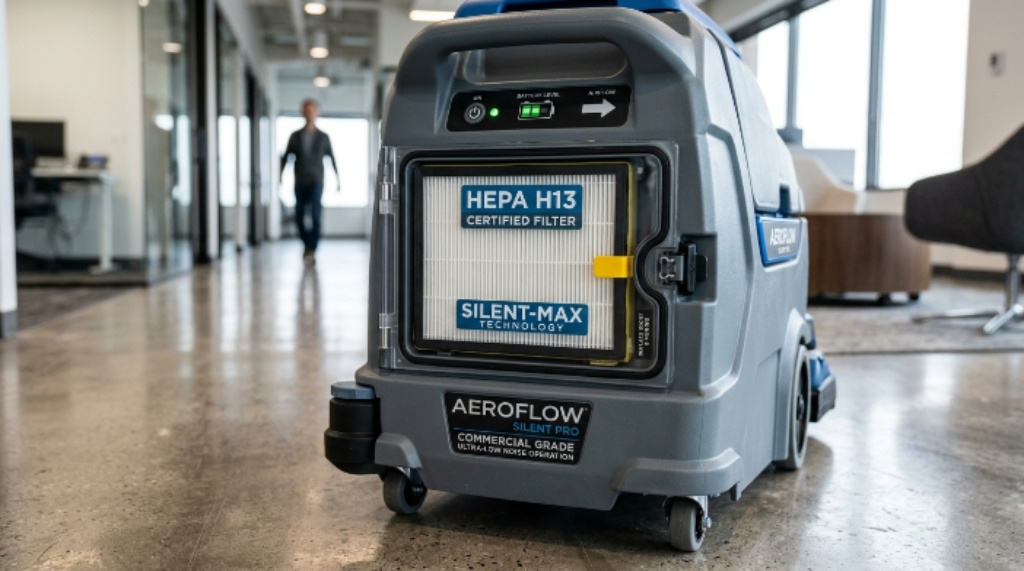
Always choose a model with HEPA filtration. HEPA filters capture 99.97 percent of particles as small as 0.3 microns. This means the air coming out of the vacuum is cleaner than the air going in. For a restaurant, this is not a luxury. It is a necessity.
Additionally, sealed filtration systems prevent dirty air from leaking through the body of the machine. Check whether the model you are considering has a fully sealed design. Some budget models have excellent filters but poor sealing, which defeats the purpose.
Flooring Types and Matching the Right Vacuum
Dining spaces often have mixed flooring. You may have hardwood near the entrance, tile in the main dining area, and carpet or rugs in a lounge section. Therefore, a versatile vacuum that handles multiple floor types is always a smart investment.
Look for models with automatic floor detection or an adjustable floor head. These features allow the vacuum to switch between hard floors and carpet without manual adjustments. On hard floors, the brush roll should be gentle enough to avoid scratches. On carpet, it should have enough agitation to lift embedded debris.
However, avoid vacuums with stiff, aggressive brush rolls if your dining room has delicate hardwood or polished tile. These can cause surface damage over time.
Budget Considerations for Dining Space Vacuums
Quality quiet vacuums come in a range of price points. For a small cafe or dining room, a mid-range model between $150 and $400 will usually meet your needs. For a larger restaurant, investing in a commercial-grade unit between $400 and $1,000 is often worthwhile.
Think of the vacuum as a long-term investment. A cheaper model that wears out quickly or fails to clean effectively costs more in the long run. Additionally, a vacuum that is too loud damages your guest experience, which has its own hidden cost.
Consider the warranty as well. Commercial-grade equipment typically comes with longer warranty periods and better service support. This matters when the machine is used daily in a demanding environment.
Maintenance Tips to Keep Your Vacuum Running Quietly
Even the best quiet vacuum will become louder over time if it is not properly maintained. Clogged filters force the motor to work harder, which increases noise levels. Therefore, cleaning or replacing filters on schedule is essential.
Empty the dustbin or replace the bag before it reaches full capacity. An overfull bin reduces suction and strains the motor. Additionally, check the brush roll regularly for tangled hair or debris. A blocked brush roll creates extra friction and noise.
Store the vacuum in a clean, dry area when not in use. Moisture and dust buildup in the motor housing can also cause performance issues over time.
Conclusion
Picking the right vacuum for a busy dining space comes down to balancing noise, power, filtration, and practicality. Start with the decibel rating and aim for 70 dB or below. Match the vacuum type to your floor surfaces and the size of your space. Prioritize HEPA filtration to maintain hygiene standards expected in any food service environment.
Whether you manage a small café or a large restaurant, investing in silent cleaning equipment is an investment in your guest experience and your team’s comfort. Low noise vacuum options are now more accessible and more powerful than ever before. Additionally, good restaurant maintenance practices, including regular filter changes and proper storage, will keep your equipment performing at its best for years to come.
Choose wisely, clean quietly, and let your dining space speak for itself.
Frequently Asked Questions
What decibel level is considered quiet for a vacuum cleaner in a restaurant?
A vacuum operating at 70 dB or below is generally considered quiet for dining environments. Premium models can reach as low as 60 dB, which is close to a normal conversation level.
Can I use a robotic vacuum as the only cleaning solution in a restaurant?
Robotic vacuums are excellent for routine maintenance but are not powerful enough to handle heavy debris on their own. They work best when used alongside a traditional quiet vacuum for deeper cleaning sessions.
How often should I clean or replace the filters in a commercial dining room vacuum?
For daily use, clean reusable filters at least once a week and replace disposable filters every one to three months. Always follow the manufacturer’s recommendations for your specific model.
Is cordless or corded better for cleaning between meal services?
Cordless models are better suited for quick cleaning between services because they are lightweight, quiet, and easy to deploy without setting up cords. However, for thorough deep-cleaning sessions, a corded model offers more consistent power.
Do quiet vacuums have less suction power than louder models?
Not necessarily. Modern engineering has made it possible to build vacuums with strong suction and low noise output. Always check both the suction power rating (in air watts or Pa) and the decibel level when comparing models.
Related Topics:
Moss Be Gone: How to Get Your Roof Sparkling Clean Again
Conquer the Clutter: Effective Strategies for an Organized and Efficient Living Space