
What is homeowner association insurance and why does it matter?
Homeowner association (HOA) insurance is a master insurance policy purchased by an HOA to protect shared property, common areas, liability risks, and sometimes parts of individual units depending on the coverage type.
If you live in a condo, townhouse community, or planned neighborhood with shared amenities, your financial protection depends partly on insurance you don’t control directly. That insurance is your HOA’s master policy—and misunderstanding what it covers is one of the biggest reasons homeowners face unexpected repair bills after accidents or disasters.
Many residents assume HOA insurance protects everything inside and outside their home. It doesn’t. Coverage varies widely by policy structure, governing documents, and state regulations. In some cases, owners must insure walls, fixtures, flooring, and even plumbing systems themselves.
Homeowner association insurance is a shared-risk policy that protects common property, community structures, and liability exposures managed by the HOA. Understanding how it works helps prevent coverage gaps, disputes, and costly surprises after claims.
This guide explains what HOA insurance covers, what it excludes, how it differs from individual homeowners insurance, and how to choose the right complementary protection.
What does homeowner association insurance cover?
HOA insurance typically covers shared structures, common areas, association liability exposure, and sometimes portions of residential units depending on the master policy type.
The HOA master insurance policy protects assets owned collectively by the association rather than individually by residents. Coverage scope depends on whether the policy is bare walls, single entity, or all-in coverage.
Common property typically covered by HOA insurance
- Hallways and stairwells
- Clubhouses and fitness centers
- Swimming pools and playgrounds
- Elevators
- Shared roofs
- Exterior walls
- Parking areas
- Landscaping owned by the association
For example, if a storm damages a condominium building’s roof, the HOA master policy usually pays for repairs. However, interior drywall damage inside a unit may fall under the homeowner’s individual policy depending on coverage structure.
Does HOA insurance include liability protection?
Yes, HOA insurance usually includes liability coverage that protects the association if someone is injured in a shared area or sues the community.
Examples include:
- A visitor slipping near the community pool
- Property damage caused by maintenance negligence
- Legal defense costs related to association operations
According to industry estimates from community association risk managers, liability claims represent one of the most frequent HOA insurance expenses after property damage.
What are the different types of HOA master insurance policies?
HOA master policies generally fall into three categories: bare walls coverage, single entity coverage, and all-in coverage, each determining how much responsibility homeowners retain.
| Policy Type | What It Covers | What Owners Must Cover |
|---|---|---|
| Bare Walls Coverage | Structure framing and exterior | Interior walls, flooring, fixtures, cabinets |
| Single Entity Coverage | Standard fixtures installed by builder | Upgrades, renovations, personal property |
| All-In Coverage | Fixtures, installations, built-ins | Personal belongings and liability |
Understanding which category applies to your association determines whether you need additional interior structure coverage.
Which HOA master policy type is most common?
Single entity coverage is the most common HOA master policy because it balances cost efficiency with moderate structural protection.
What is not covered by HOA insurance?
HOA insurance usually excludes personal belongings, interior upgrades, individual liability, temporary living expenses, and damage inside units unless specifically included in the master policy.
Common exclusions include:
- Furniture and electronics
- Clothing and valuables
- Interior renovations
- Personal liability lawsuits
- Water damage from inside-unit plumbing
- Loss of use expenses
This is why most lenders require condo owners to carry an HO-6 insurance policy alongside HOA coverage.
What is HO-6 insurance and why do condo owners need it?
HO-6 insurance is an individual condo insurance policy that protects interior structures, personal belongings, liability exposure, and living expenses not covered by the HOA master policy.
HO-6 insurance fills coverage gaps left by association policies.
What does HO-6 insurance typically include?
- Interior wall coverage
- Flooring and cabinetry
- Personal belongings
- Personal liability protection
- Guest injury protection
- Temporary housing costs after damage
Without HO-6 coverage, homeowners may pay out of pocket for repairs inside their own units—even after major insured events.
Who pays the HOA insurance premium?
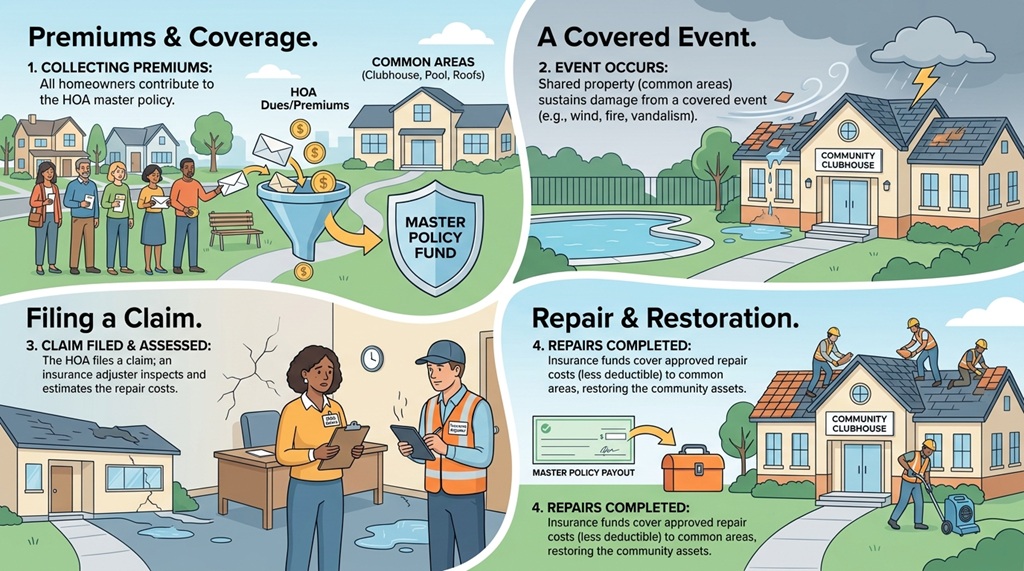
HOA insurance premiums are paid collectively by residents through monthly association dues or special assessments.
The association board selects the policy, negotiates coverage limits, and distributes costs across members based on ownership share or unit size.
Can HOA insurance costs increase suddenly?
Yes, HOA premiums can increase after claims, regional disasters, inflation in construction costs, or insurer risk reassessments.
Communities located in hurricane, wildfire, or flood-prone regions often experience the largest increases.
Does HOA insurance cover water damage between units?
HOA insurance may cover water damage between units if the source originates from common infrastructure, but damage inside individual units is usually handled by personal insurance.
Responsibility depends on:
- Source of leak
- Association governing documents
- Master policy structure
- State insurance regulations
For example, a burst pipe in a shared wall may fall under HOA coverage, while a leaking washing machine inside a unit typically does not.
Does HOA insurance cover roof replacement?
Yes, HOA insurance usually covers roof replacement when the roof belongs to the association and damage results from a covered event such as storms, fire, or vandalism.
However, coverage may exclude:
- Normal wear and tear
- Poor maintenance
- Construction defects
Roof replacement represents one of the most expensive claims categories for associations, making adequate reserve funding essential alongside insurance protection.
Does HOA insurance protect board members?
Yes, many HOA insurance policies include directors and officers (D&O) coverage that protects board members from lawsuits related to governance decisions.
D&O insurance typically covers:
- Mismanagement allegations
- Budget disputes
- Rule enforcement conflicts
- Vendor contract decisions
Without this protection, volunteer board members could face personal financial exposure.
How much HOA insurance coverage should an association carry?
An HOA should carry enough insurance to fully rebuild shared structures, cover liability exposure, and protect board governance responsibilities.
Associations typically evaluate coverage based on:
- Total replacement cost value
- Regional disaster exposure
- Community amenities
- Number of residents
- Legal liability risk
Insurance professionals often recommend liability coverage starting at $1 million per occurrence, though larger communities frequently carry higher umbrella policies.
How do HOA governing documents affect insurance coverage?
HOA governing documents define which property elements fall under association insurance versus homeowner responsibility.
Key documents include:
- CC&Rs (Covenants, Conditions, and Restrictions)
- Bylaws
- Insurance responsibility matrices
These documents override assumptions about coverage and should be reviewed before purchasing supplemental insurance.
Can homeowners file claims directly through HOA insurance?
Homeowners usually cannot file claims directly; the HOA board or property manager submits claims on behalf of the association.
Residents must notify management promptly when damage affects shared property.
Delays in reporting incidents can lead to denied claims or higher repair costs.
What happens if HOA insurance coverage is insufficient?
If HOA insurance limits are too low, residents may face special assessments to cover repair costs beyond policy limits.
Special assessments are one of the most significant financial risks in association living.
For example:
- Major structural damage after storms
- Unexpected litigation costs
- Insurance deductible shortfalls
Some associations carry deductibles exceeding $50,000 per incident, which may be shared among homeowners.
How does HOA insurance differ from homeowners insurance?
HOA insurance protects shared structures and association liability, while homeowners insurance protects individual units, belongings, and personal liability.
| Coverage Area | HOA Insurance | Homeowners Insurance (HO-6) |
|---|---|---|
| Exterior structure | Yes | No |
| Interior fixtures | Sometimes | Yes |
| Personal belongings | No | Yes |
| Liability protection | Association only | Individual owner |
| Temporary housing | No | Yes |
Does HOA insurance cover natural disasters?
HOA insurance covers certain natural disasters such as storms, fire, and wind damage but typically excludes floods and earthquakes unless separate policies are purchased.
Associations in high-risk regions often carry additional:
- Flood insurance
- Earthquake coverage
- Windstorm riders
Residents should confirm whether their community maintains these protections.
Conclusion
Homeowner association insurance plays a central role in protecting shared property, limiting liability exposure, and maintaining financial stability across residential communities. But it does not replace individual coverage. Understanding whether your association uses bare walls, single entity, or all-in protection determines what risks remain your responsibility.
Review governing documents carefully. Confirm deductible levels. Carry an appropriate HO-6 policy. These steps prevent unexpected expenses after damage events or liability claims.
If you live in an HOA-managed property, request a copy of the master insurance summary today and compare it with your personal policy. A short review now can prevent major financial surprises later.
FAQ: Homeowner Association Insurance Questions
Is HOA insurance required by law?
HOA insurance is usually required by governing documents rather than state law, though many states mandate minimum liability coverage for associations managing shared property.
Does HOA insurance cover interior walls?
Interior wall coverage depends on whether the association carries bare walls, single entity, or all-in coverage.
Do townhouse owners need HOA insurance?
Townhouse owners typically benefit from HOA insurance for shared roofs, exterior walls, and common areas but still need individual homeowners coverage.
Can HOA insurance deny claims?
Yes, claims may be denied if damage results from maintenance neglect, excluded hazards, or incidents outside policy coverage limits.
Does HOA insurance cover vandalism?
Yes, vandalism affecting shared community property is usually covered under HOA master policies.
What happens if a neighbor causes damage to my unit?
Your personal insurance typically handles repairs first, then may pursue reimbursement through subrogation against the responsible party.
How can homeowners verify HOA insurance coverage details?
Homeowners can request the association’s insurance certificate, summary of coverage, and governing documents from the property manager or board.
Read More Also: How to Fix Common Household Plumbing Issues with Simple Tools
Find out: How to Hang Wall Plates as Home Decor