Plumbing problems happen in every home. A dripping faucet, a slow drain, or a running toilet can disrupt your daily life. The good news is that many of these issues are easy to fix on your own. You do not always need to call a plumber.
With the right knowledge and a basic set of pipe fixing tools, you can handle most common plumbing problems yourself. This saves you time and money. Additionally, learning these skills gives you more control over your home.
This article will walk you through the most common household plumbing issues. It will also show you how to fix them using simple tools that are easy to find at any hardware store.
Understanding Basic Plumbing Before You Start
Before you pick up any tool, it helps to understand how your home plumbing works. Most homes have two separate systems. One brings fresh water in. The other carries wastewater out.
The water supply system works under pressure. This is why leaks can spray or drip continuously. The drainage system, however, relies on gravity. This is why clogs form so easily in pipes that slope downward.
Knowing which system has the problem helps you fix it faster. Always start by turning off the water supply. You can do this at the main shutoff valve or at the local valve near the fixture. This simple step prevents flooding and keeps your work area dry.
Essential Tools Every Homeowner Should Have
You do not need a truck full of equipment to fix most plumbing problems. A small collection of reliable tools will get you through the majority of repairs. Here is what you should keep on hand.
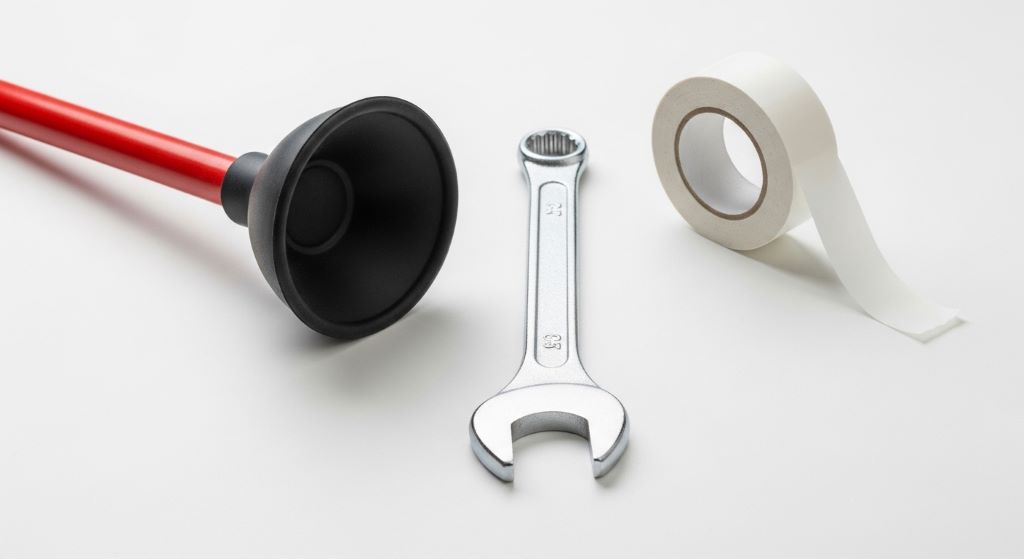
A good set of pipe fixing tools should include:
- An adjustable wrench for tightening and loosening nuts and bolts
- Slip-joint pliers for gripping pipes and fittings
- A pipe wrench for heavy-duty pipe connections
- A plunger for clearing drain clogs
- A plumber’s snake or drain auger for deep blockages
- Plumber’s tape (also called Teflon tape) for sealing threaded connections
- A putty knife for removing old sealant
- A hacksaw for cutting pipes when needed
- A bucket and towels for catching water during repairs
These tools cover most situations you will encounter at home. Therefore, investing in quality versions of each item is worth it. Cheap tools can break mid-job and make the problem worse.
How to Fix a Dripping Faucet
A dripping faucet is one of the most common plumbing complaints. It also wastes a surprising amount of water over time. Fortunately, it is one of the easiest repairs to make.
Most faucet drips come from a worn-out washer or O-ring. These small rubber parts sit inside the faucet and create a watertight seal. Over time, they wear down and allow water to seep through.
To fix a dripping faucet, follow these steps:
- Turn off the water supply to the faucet.
- Remove the faucet handle. There is usually a screw hidden under a decorative cap.
- Unscrew the packing nut and pull out the stem.
- At the bottom of the stem, you will find the washer. Remove the old washer and replace it with a new one of the same size.
- Reassemble the faucet in reverse order.
- Turn the water back on and check for drips.
This repair takes less than 30 minutes in most cases. However, if your faucet is a cartridge or ball type, the process is slightly different. You may need to replace the entire cartridge instead of just the washer.
How to Unclog a Drain
Clogged drains are frustrating. They slow down your sink, tub, or shower and can even cause water to back up. However, most clogs are easy to clear without chemicals.
Start with a plunger. Fill the sink or tub with a few inches of water. Place the plunger cup over the drain and push down firmly, then pull up quickly. Repeat this several times. The suction and pressure often break up the clog and push it through the pipe.
If the plunger does not work, try a drain snake. Feed the snake into the drain and turn the handle clockwise. When you feel resistance, you have found the clog. Continue turning to break it up or hook it so you can pull it out.
For bathroom drains, hair is usually the culprit. A simple plastic drain cleaning tool with barbed edges can grab hair clogs quickly. These inexpensive tools are highly effective and easy to use.
Avoid using chemical drain cleaners regularly. They can damage pipes over time, especially older pipes made of metal. Physical tools are safer and more effective for most clogs.
How to Fix a Running Toilet
A running toilet wastes hundreds of gallons of water each month. The sound of water constantly running in the tank is a clear sign something is wrong inside the tank.
The most common cause is a faulty flapper. The flapper is the rubber valve at the bottom of the tank. It lifts when you flush and then drops back down to seal the tank. If it does not seal properly, water keeps flowing into the bowl.
To replace the flapper:
- Turn off the water supply valve behind the toilet.
- Flush the toilet to empty the tank.
- Unhook the old flapper from the two pegs on the overflow tube.
- Disconnect the chain from the flush handle arm.
- Attach the new flapper in the same way.
- Reconnect the chain, leaving a small amount of slack.
- Turn the water back on and let the tank fill.
- Test by flushing and watching to see if the running stops.
If the flapper looks fine, the problem may be the fill valve or the float. These parts are also easy to replace and come in affordable kits at hardware stores.
How to Fix a Leaking Pipe Joint
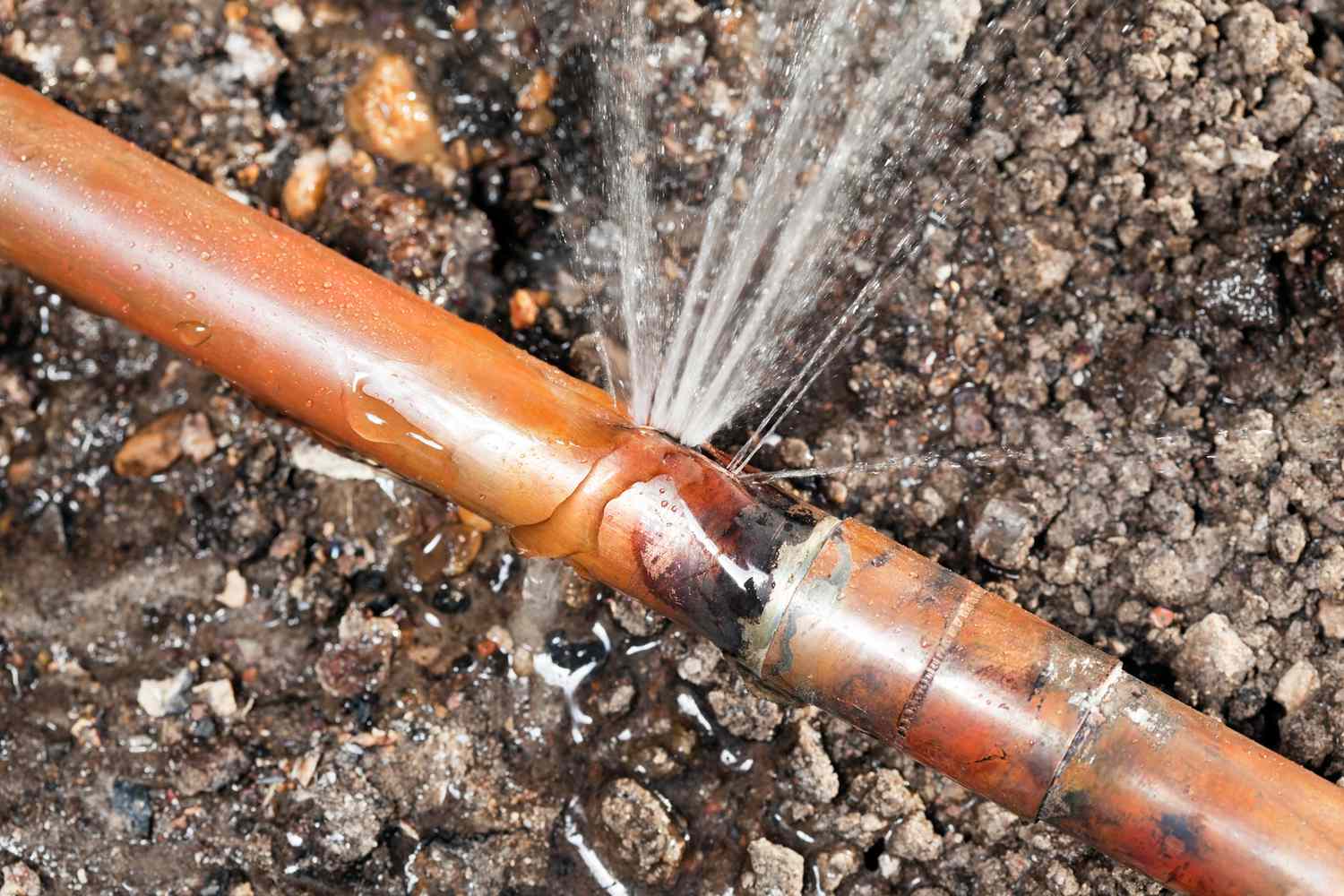
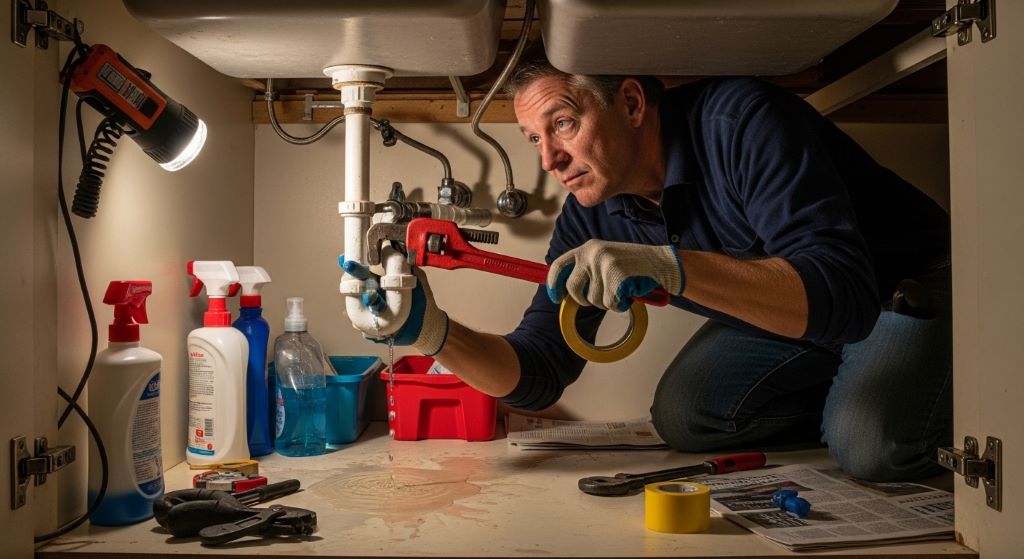
Leaking pipe joints are more serious than a dripping faucet. However, many joint leaks can be fixed without replacing the entire pipe. Effective leak repair tools and supplies make this job manageable.
For small leaks at threaded joints, plumber’s tape is your best friend. Wrap it clockwise around the male threads before connecting the fitting. This creates a tight, waterproof seal.
For larger leaks or cracks in a pipe, you have a few options:
- Pipe repair clamps are quick, strong, and easy to apply. Slide the clamp over the damaged area and tighten the screws.
- Epoxy putty can seal small cracks and holes. Knead the two-part putty together and press it firmly over the leak. It hardens within minutes.
- Slip couplings let you cut out a damaged section of pipe and replace it cleanly.
Always dry the pipe surface before applying any sealant. Water on the surface prevents adhesion and reduces the effectiveness of the repair. Additionally, check the surrounding area for mold or water damage that may need attention after the repair.
How to Fix Low Water Pressure
Low water pressure makes showers weak and slows down everything from dishwashing to filling a pot. Several issues can cause this problem.
First, check if the problem affects only one fixture or your whole home. If it is just one faucet, the aerator may be clogged. The aerator is the small screen at the tip of the faucet. Unscrew it, rinse it under water, and remove any mineral buildup. Then screw it back on.
If pressure is low throughout your home, check the main shutoff valve. Make sure it is fully open. Sometimes it gets partially closed accidentally.
Hard water can also cause buildup inside pipes and fixtures over time. This restricts flow. A descaling solution can help in mild cases. However, severe buildup may require pipe replacement.
How to Repair a Leaking Showerhead
A leaking showerhead drips even when the shower is off. This wastes water and can stain your tub or tiles. Fortunately, this is a simple repair.
Start by removing the showerhead. Most unscrew by hand or with a wrench. Wrap the pipe threads with fresh plumber’s tape. Screw the showerhead back on and turn the water on to check.
If the showerhead still leaks, the internal washers may be worn. You can find replacement washers at any hardware store. Disassemble the showerhead, replace the washers, and reassemble it.
Soaking a clogged showerhead in white vinegar overnight can also improve water flow. This dissolves mineral deposits that block the nozzles.
Safety Tips for DIY Plumbing Repairs
Safety should always come first when doing any home repair. Here are a few important reminders.
Always shut off the water before starting any repair. Even a small oversight can lead to flooding. Keep a bucket and old towels nearby. Plumbing work almost always involves some spillage.
Wear gloves when working with older pipes. Lead pipes and certain types of solder can be harmful to skin. Additionally, protect your eyes when cutting pipes or working in tight spaces.
Do not overtighten connections. This can crack fittings and cause leaks. Tighten until snug, then give it one extra quarter turn. That is usually enough.
Know when to call a professional. If you see extensive water damage, mold, or a leak in the main water line, stop and call a licensed plumber. Some problems are beyond the reach of standard leak repair tools and DIY methods.
Conclusion
Fixing common household plumbing problems is well within reach for most homeowners. From a dripping faucet to a clogged drain, these repairs require only basic skills and a few reliable tools.
Start by understanding your home’s plumbing system. Invest in a solid set of pipe fixing tools. Learn the right technique for each type of repair. And always prioritize safety by shutting off water before you begin.
With patience and practice, you can handle most plumbing issues on your own. Therefore, the next time something drips, clogs, or leaks, you will be ready to fix it yourself and save both time and money.
Frequently Asked Questions (FAQs)
What are the most important tools for basic plumbing repairs at home?
The most important tools include an adjustable wrench, pliers, a plunger, a drain snake, and plumber’s tape. These cover the majority of common household repairs.
Can I fix a leaking pipe without calling a plumber?
Yes, in many cases. Small leaks at joints can be fixed with plumber’s tape or epoxy putty. However, major leaks in main supply lines should be handled by a licensed professional.
How do I know if my toilet is running?
You will usually hear a constant sound of water trickling into the bowl. You can also add a few drops of food coloring to the tank. If color appears in the bowl without flushing, the flapper is leaking.
Is it safe to use chemical drain cleaners regularly?
No. Chemical drain cleaners can corrode pipes over time, especially metal ones. Physical tools like plungers and drain snakes are safer and often more effective.
How can I prevent plumbing problems from happening in the first place?
Regular maintenance helps a lot. Clean drain covers, check for slow leaks, avoid pouring grease down the drain, and inspect supply lines under sinks every six months. Early detection prevents costly repairs.
Related Topics:
Clog Busters Unite! How to Conquer a Main Sewer Line Blockage Yourself
Keeping Things Flowing: How Often Should You Clean Your Gutters?