Does your once-gleaming jewelry collection now appear dull and lifeless? Don’t despair! Tarnish, a buildup of oxidation or corrosion, is a common enemy of all metals, but luckily, it’s often easily treatable with some simple DIY techniques. This article equips you with a range of effective cleaning methods for various types of jewelry, allowing you to restore your cherished pieces to their former glory without breaking the bank.
Understanding Tarnish: A Matter of Metal
Tarnish forms on different metals in unique ways. Here’s a quick breakdown:
- Silver: The most common culprit for tarnish is silver. Silver reacts with sulfur in the air, forming a dark, blackish film.
- Gold: While generally resistant to tarnish, gold alloys containing copper or silver can develop a reddish tinge.
- Costume Jewelry: Fashion jewelry often uses a combination of base metals like brass, copper, or nickel, which can tarnish and appear dull or discolored.
Know Your Bling: Identifying Jewelry Materials
Before diving into cleaning, it’s crucial to identify the type of metal your jewelry is made of. Here are some tips:
- Look for markings: Many pieces of jewelry have small hallmarks indicating the metal content. Common markings include “925” for sterling silver, “14k” or “18k” for gold purity, and “CZ” for cubic zirconia (a diamond simulant).
- Magnet Test: A simple yet effective method! If a magnet sticks to the jewelry, it’s likely made of a ferrous metal like iron or steel (not commonly used in fine jewelry). Non-magnetic metals could be silver, gold, platinum, or costume jewelry.
- Consult a Jeweler: If you’re unsure about the material, seeking a jeweler’s expertise is always a safe bet.
Cleaning with Confidence: Tailored Techniques for Different Metals
Now that you understand the enemy and your jewelry’s identity, let’s explore some cleaning methods:
-
Silver Savior:
- Baking Soda Bath: This gentle yet effective method is perfect for lightly tarnished silver. Line a bowl with aluminum foil (shiny side up) and fill it with warm water. Add a tablespoon of baking soda and a teaspoon of salt. Submerge your silver jewelry for 10-15 minutes. Rinse thoroughly and buff dry with a soft cloth. The aluminum creates a gentle chemical reaction that helps lift the tarnish.
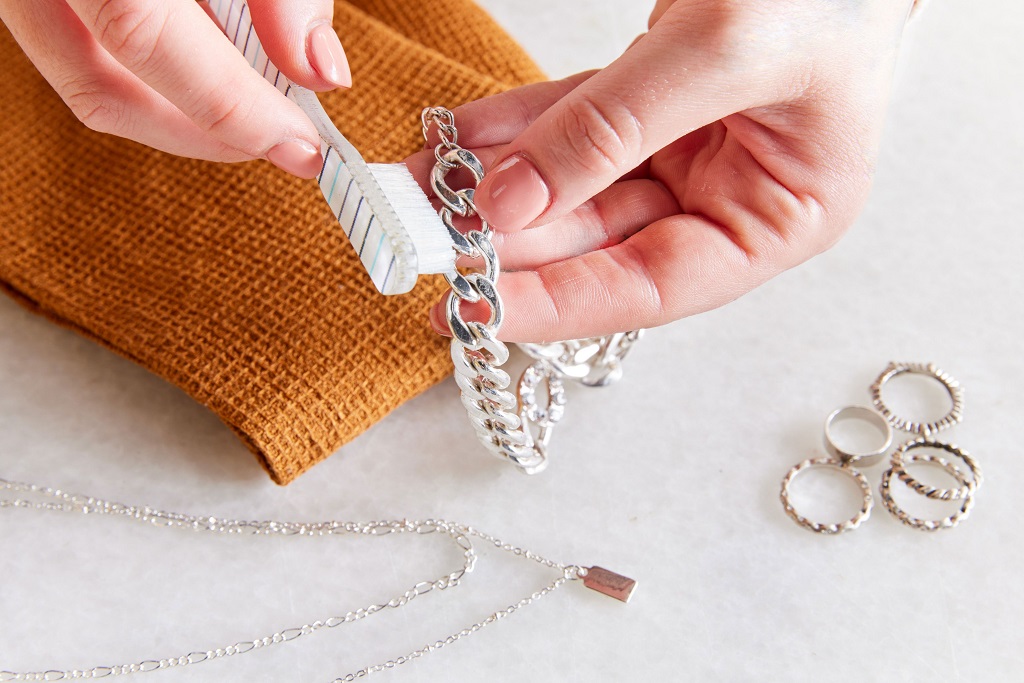
- Baking Soda Paste: For stubborn tarnish, create a paste by mixing baking soda with a little water. Apply the paste to the tarnished areas using a soft toothbrush, then rinse and buff dry.
-
Gold Standard:
- Mild Dish Soap: For everyday cleaning of gold jewelry, a gentle dish soap solution works wonders. Mix a few drops of mild dish soap in warm water. Soak your gold jewelry for a few minutes, then use a soft toothbrush to clean any crevices. Rinse thoroughly and dry with a soft cloth.
- Jewelry Cleaning Cloth: Invest in a specially treated jewelry cleaning cloth designed for gold. These cloths gently remove the tarnish and polish the surface.
-
Costume Jewelry Care:
- Warm Water Soak: For costume jewelry, a simple warm water soak can often remove dust and grime. Add a drop of mild dish soap if needed. Rinse thoroughly and dry completely with a soft cloth. Avoid harsh chemicals or abrasive cleaners, as they can damage the delicate finishes on costume jewelry.
Beyond the Basics: Advanced Techniques and Special Considerations
- Gemstone Gentleness: Be mindful of gemstones when cleaning jewelry. Some gemstones, like pearls and opals, are delicate and require special care. Consult a jeweler for cleaning recommendations for specific gemstones.
- Ultrasonic Cleaners: Ultrasonic cleaners use sound waves to create tiny vibrations that can remove dirt and tarnish from jewelry. While effective, they can be harsh on some gemstones and delicate pieces. Consult your jeweler before using an ultrasonic cleaner.
- Professional Cleaning: For heavily tarnished or intricate pieces, or jewelry with delicate gemstones, consider seeking professional cleaning from a jeweler. They have the expertise and equipment to ensure safe and thorough cleaning.

Prevention is Key: Keeping Your Jewelry Sparkling Long-Term
Here are some tips to minimize future tarnish and maintain your jewelry’s shine:
- Store it Right: Store your jewelry in a cool, dry place away from direct sunlight. Tarnish thrives in humid environments.
- Clean Regularly: Develop a routine of cleaning your jewelry regularly, even if it doesn’t appear tarnished. This helps prevent the buildup of dirt and grime.
- Separate Storage: Store different types of metals separately to prevent a process called “galvanic corrosion.” When dissimilar metals come into contact, the less noble metal can corrode faster.
- Love, Not Lacquer: Avoid using harsh chemicals or abrasive cleaners on your jewelry. They can damage the metal and gemstones.
Related: Embracing Your Inner DIYer: Beginner-Friendly Projects to Personalize Your Home
The Joy of Revived Jewelry: A Rewarding DIY Project
Restoring your cherished jewelry to its original brilliance is a rewarding DIY project. With a little knowledge and the right techniques, you can breathe new life into your favorite pieces. So, grab your cleaning supplies, embrace the satisfaction of a sparkling collection, and rediscover the joy of wearing your treasured adornments!